Skip to content

Cart

Your cart is empty

INGREDIENT DICTIONARY

Ethylhexylglycerin

INCI: Ethylhexylglycerin | CAS #: 70445-33-9
Shop this ingredient →

Ethylhexylglycerin is a multifunctional cosmetic ingredient with skin-conditioning, mild humectant and antimicrobial properties. It is particularly valued for enhancing the effectiveness of compatible preservative systems while contributing to a soft, smooth skin feel.

Its antibacterial activity also makes it useful in deodorant formulations, where it can help control odour-causing microorganisms. Although it provides antimicrobial support, it is generally used alongside broader-spectrum preservatives rather than relied upon as the sole means of protecting a formulation.

What is Ethylhexylglycerin & why is it used?

Ethylhexylglycerin is a synthetic glyceryl ether derived from glycerol chemistry. Its molecular structure contains both water-attracting and oil-attracting regions, allowing it to interact with the lipid-rich membranes of certain microorganisms.

These interactions can disrupt microbial membrane function and increase the effectiveness of compatible antimicrobial preservatives. This is particularly useful in cosmetic formulations where multiple ingredients work together to provide protection against microbial contamination.

Ethylhexylglycerin also has skin-conditioning properties and can inhibit certain bacteria associated with body odour. However, its antimicrobial activity is not sufficiently broad or reliable to replace a complete preservation system in most water-containing cosmetics.

QUALITY MATTERS

Why specification quality matters

When evaluating Ethylhexylglycerin as a cosmetic raw material, formulators should review the supplier’s technical specifications for identity, purity, appearance and relevant physical properties.

Relative density and refractive index may be useful supporting identity and consistency parameters, while the Certificate of Analysis should confirm conformity with the supplier’s established specification.

Documentation should be assessed against the intended application, particularly where ingredient traceability, impurity information or specific regulatory requirements are important. Raw-material conformity does not establish the preservation performance or safety of the finished formulation.

Appearance Colourless to pale yellow liquid
Solubility Oil soluble
Primary function Preservation
Use level 0.3–1.0%

Key benefits

Preservative Synergy

Preservative Synergy

Preservative Synergy — Can enhance the antimicrobial performance of compatible preservatives by affecting microbial membrane integrity.
Multifunctional Activity

Multifunctional Activity

Combines preservation-supporting properties with skin-conditioning functionality, allowing one ingredient to contribute to more than one formulation objective.
Deodorant Functionality

Deodorant Functionality

Helps inhibit certain bacteria involved in the breakdown of sweat components that produce body odour.

Preservation System Flexibility

Can be incorporated into different preservative combinations, allowing formulators to evaluate performance across a range of cosmetic formulations.

Behaviour in formulations

Ethylhexylglycerin is an amphiphilic ingredient, meaning its molecular structure contains both water-attracting and oil-attracting regions. However, it has limited solubility in water and may require a suitable solubiliser or co-solvent for incorporation into clear aqueous formulations.

In emulsions, Ethylhexylglycerin can interact with surfactants, emulsifiers and other formulation components. Its distribution within the formulation may influence both physical stability and antimicrobial performance.

Its preservative-boosting effectiveness depends on the complete formulation, including the antimicrobial ingredients present, their concentrations and the surrounding formulation environment. Changes to surfactant systems or other ingredients can affect how Ethylhexylglycerin performs.

Formulators should evaluate clarity, viscosity, phase stability and preservative efficacy when incorporating Ethylhexylglycerin, particularly in transparent or structurally sensitive formulations.

Sensory notes

Ethylhexylglycerin has mild emollient and skin-conditioning properties that can contribute to a smoother, softer skin feel. Its spreading characteristics may help improve glide without introducing the pronounced tackiness associated with some conventional humectants.

At typical formulation concentrations, its sensory contribution is generally subtle rather than dominant. The extent of any improvement in slip, tack or after-feel depends on the surrounding emollients, humectants and emulsifier system.

In lightweight serums and toners, achieving a pleasant sensory finish also depends on successful incorporation and solubilisation. In creams and lotions, its contribution is usually secondary to the formulation’s main emollient and structuring ingredients.

Formulation considerations

PROCESSING

Ethylhexylglycerin is a liquid ingredient that can be incorporated during formulation processing, provided it is adequately dispersed or dissolved within the chosen system.

In clear, water-based formulations, pre-blending with a compatible solubiliser or co-solvent may help achieve uniform incorporation. Direct addition to water can result in cloudiness or incomplete dissolution.

Where possible, incorporate during the cool-down stage to minimise unnecessary heat exposure. The appropriate processing temperature and addition method should be confirmed against the ingredient supplier’s technical guidance and the complete formulation.

COMPATIBILITY

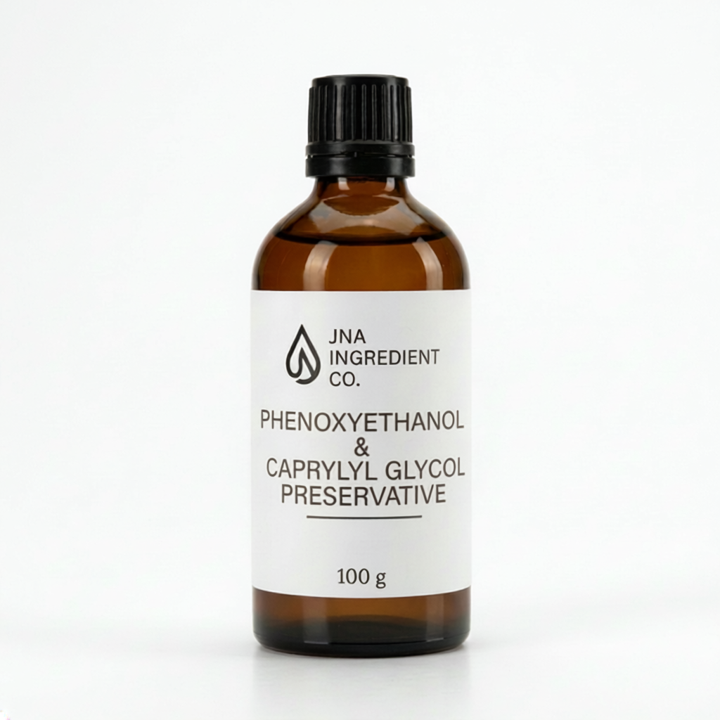
Ethylhexylglycerin is commonly combined with phenoxyethanol and other compatible antimicrobial ingredients to support preservation performance.

Its behaviour can be influenced by surfactants, emulsifiers, solubilisers and the composition of the oil and water phases. In some systems, these interactions may affect ingredient availability, clarity or emulsion stability.

Compatibility should be assessed within the complete formulation, particularly when changing preservative combinations or introducing Ethylhexylglycerin into an established formula.

pH
Ethylhexylglycerin is not primarily used to adjust formulation pH. Its preservative-boosting contribution must be considered alongside the pH requirements of the accompanying antimicrobial ingredients. For example, organic-acid preservatives such as sodium benzoate depend strongly on formulation pH for antimicrobial effectiveness, whereas phenoxyethanol-based systems have different pH considerations. Finished-product pH should be selected for the complete formulation and verified during stability and preservative efficacy testing.
FORMULATION EXAMPLES

Clear facial serum
Incorporate with a compatible solubilisation system where necessary to maintain clarity and uniform distribution.

Moisturising emulsion
Combine with a suitable preservative system, assessing any effects on viscosity, emulsion structure and stability.

Deodorant
Evaluate alongside other deodorant ingredients to help manage odour-associated bacteria without relying on Ethylhexylglycerin as an antiperspirant.

Surfactant cleanser
Assess compatibility with the surfactant system and confirm preservation performance in the finished product.

Use level considerations

Recommended range 0.3–1.0%
Suggested starting level 0.5% for most cosmetic formulations%

Ethylhexylglycerin is commonly explored at approximately 0.3–1.0% in cosmetic formulations, although the appropriate concentration depends on its intended function and the complete preservation system.

When used as a preservative booster, increasing the concentration does not necessarily produce a proportional improvement in antimicrobial performance. Effectiveness depends on the accompanying preservatives, formulation composition and interactions that influence antimicrobial availability.

A starting concentration of 0.5% may be useful for initial development trials, but should not be interpreted as a validated or universally effective level.

In clear aqueous formulations, concentration may also affect solubility and clarity. Formulators should evaluate physical stability, ingredient compatibility and preservative efficacy before establishing a final use level.


Formulation summary

Ethylhexylglycerin is a multifunctional glyceryl ether used to support cosmetic preservation systems. Its performance depends on the antimicrobial ingredients it is combined with and how it is distributed throughout the formulation.

Key formulation considerations include limited water solubility, potential interactions with surfactants and emulsifiers, and the effect of formulation composition on preservative availability. Clear aqueous products may require a suitable solubilisation system, while emulsions should be evaluated for changes in physical stability.

Ethylhexylglycerin should be assessed as part of the complete preservation strategy, with finished-product preservative efficacy testing used to verify antimicrobial protection.

Quality notes

When evaluating Ethylhexylglycerin as a cosmetic raw material, formulators should review the supplier’s technical specifications for identity, purity, appearance and relevant physical properties.

Relative density and refractive index may be useful supporting identity and consistency parameters, while the Certificate of Analysis should confirm conformity with the supplier’s established specification.

Documentation should be assessed against the intended application, particularly where ingredient traceability, impurity information or specific regulatory requirements are important. Raw-material conformity does not establish the preservation performance or safety of the finished formulation.