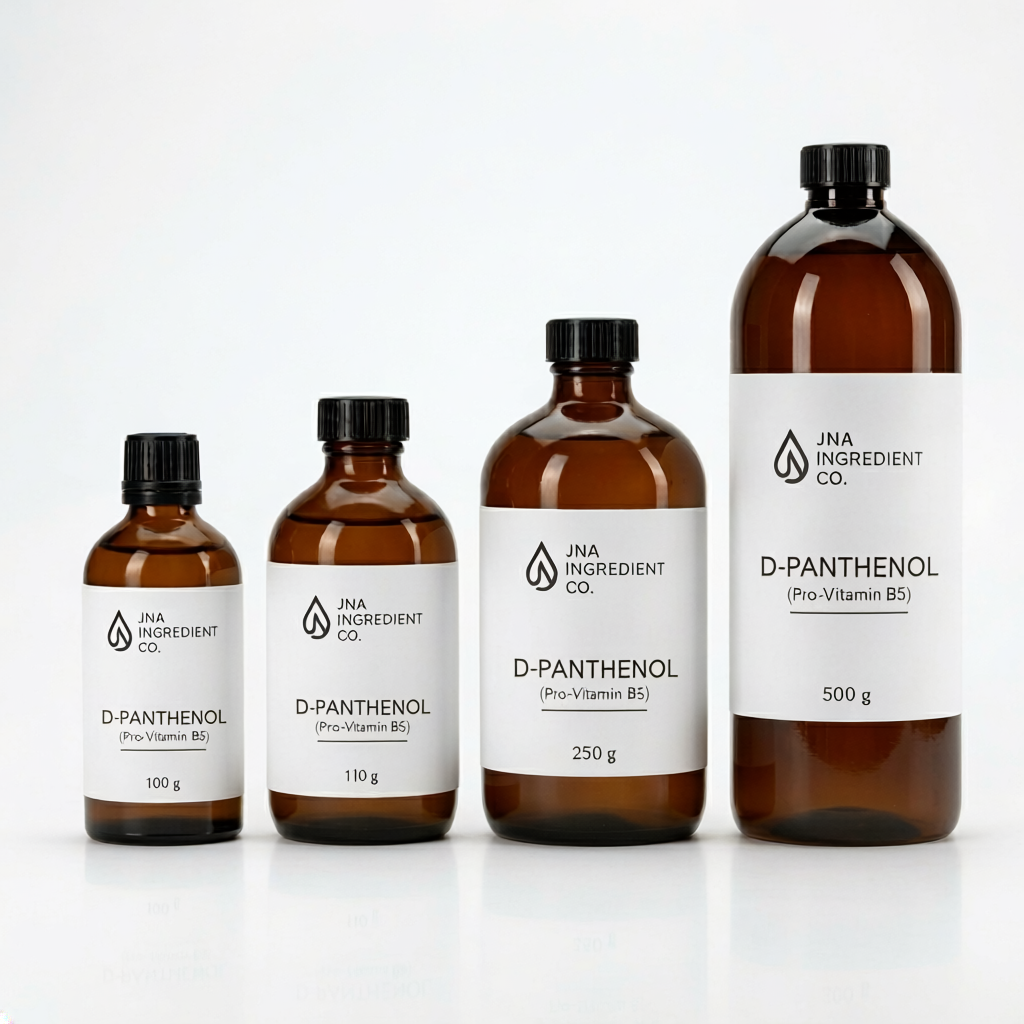
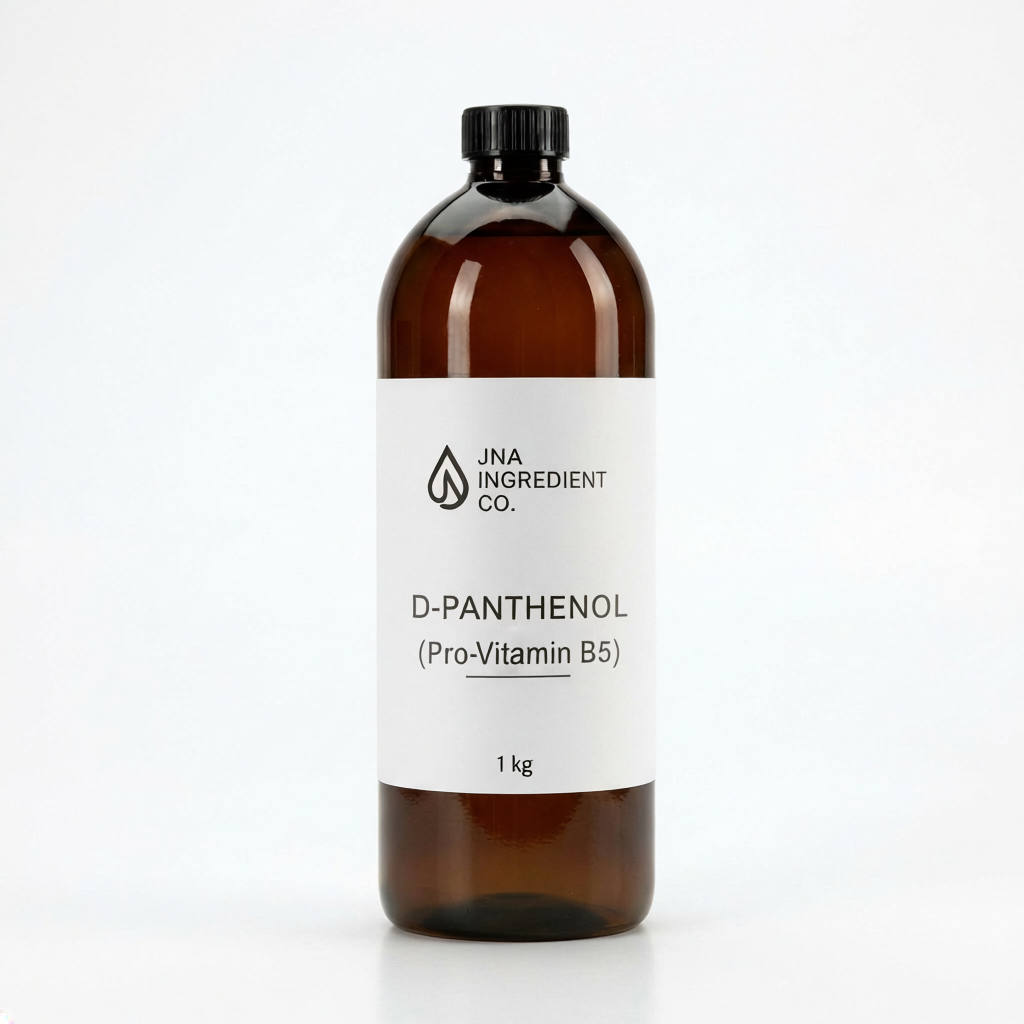
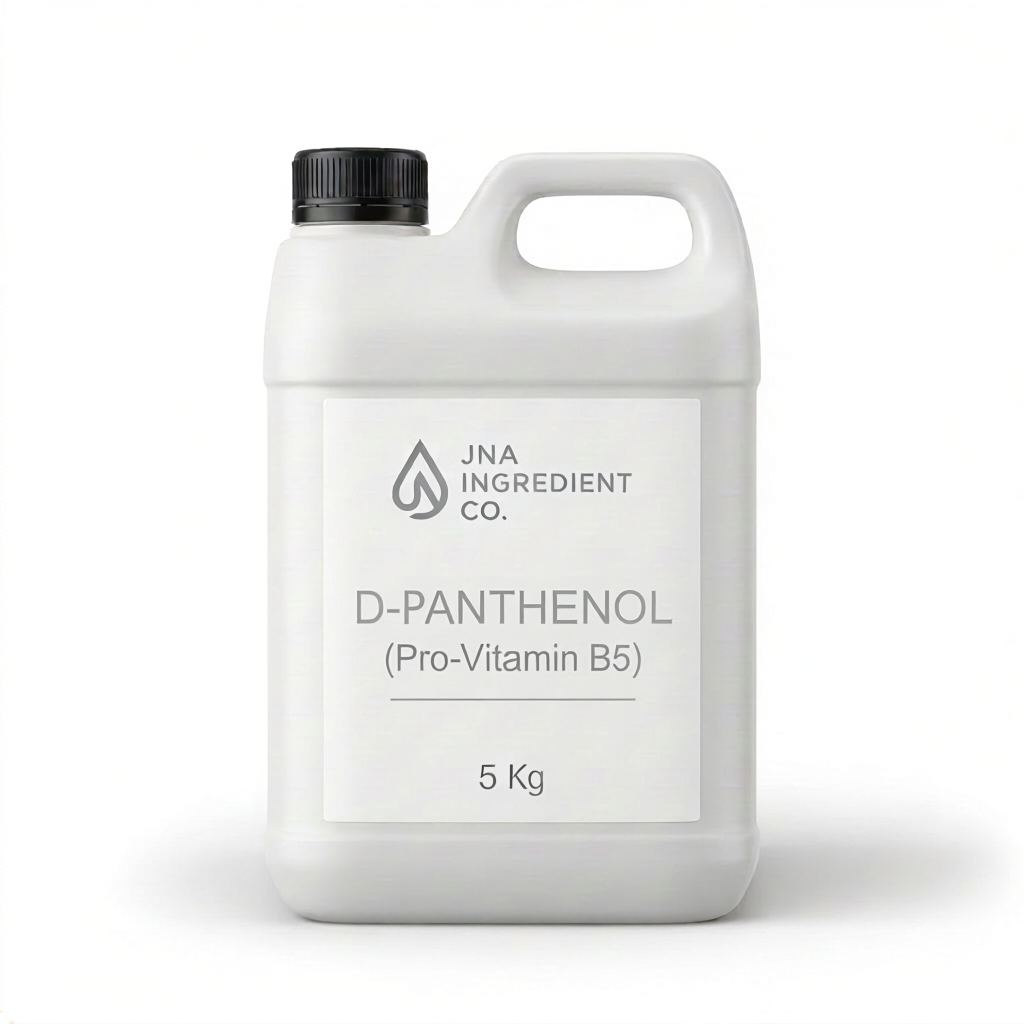


Product packaging may vary from the images shown based on pack size and packaging availability. Product specifications and declared net contents remain unchanged.
Panthenol 10% Solution
Sold by weight (g) for formulation accuracy. Reference only: 250 g ≈ 245–255 mL (at 20°C).
*Eligible Australian orders up to 10 kg. Bulk freight excluded.

Choose options


INGREDIENT OVERVIEW
Panthenol 10% Solution
D-Panthenol (Pro-Vitamin B5) is a water-soluble cosmetic active used in formulations to support barrier function, improve hydration, and enhance overall formulation feel. It is widely used across serums, creams, and hair care products due to its compatibility and performance.
Our panthenol is supplied as a high-purity, cosmetic-grade liquid with a verified active content of 85.2% and low water content (0.13%). It is selected for consistent composition and reliable formulation performance.
KEY SPECIFICATIONS
- Ingredient: D-Panthenol (Pro-Vitamin B5) - Cosmetic Grade
- INCI: Panthenol
- CAS: 81-13-0
- Solubility: Water soluble
- Typical use level:
Typical use: 0.5–5%
- 0.5–1% - Supporting level within multi-active or multi-humectant systems.
- 1–3% - Practical general-purpose range for skincare and haircare formulations.
- 3–5% - Higher inclusion where Panthenol plays a more prominent role in the conditioning/humectant system.
- Starter: 1
FORMULATION NOTES
Processing notes
D-Panthenol is suited to incorporation into the aqueous phase or an appropriate water-containing portion of cosmetic formulations.
Ensure adequate mixing for uniform distribution. Where heated manufacturing processes are used, unnecessary prolonged exposure to high temperatures should be avoided.
Cool-down incorporation can be considered where appropriate for the overall formulation and manufacturing process.
Compatibility notes
D-Panthenol can be formulated alongside a broad range of cosmetic ingredient classes, including:
Humectants · Emollients · Conditioning agents · Rheology modifiers · Soothing ingredients · Cosmetic actives
It is particularly useful in multi-humectant and multi-active systems.
Compatibility should nevertheless be assessed in the complete finished formulation, particularly where electrolytes, polymers, preservation systems or other pH-sensitive actives are present.
pH notes
D-Panthenol can be incorporated into many conventional cosmetic formulation systems. Finished-product pH should be selected according to the requirements of the complete formulation, including the preservation system and other active ingredients, rather than being determined by D-Panthenol alone.
Formulation examples
Multi-Humectant Facial Serum
Combine D-Panthenol with complementary humectants such as glycerin, propanediol or betaine where a broader hydration system is desired. Balance the combined humectant concentration against the required tack and after-feel rather than maximising each humectant independently.
Barrier-Support Cream
Use D-Panthenol within the aqueous system alongside humectants while the formulation's emollient and lipid system provides the primary barrier-supporting structure. This allows D-Panthenol to contribute hydration and conditioning without being expected to replace barrier-supporting lipids.
Soothing Hydration Gel
Combine D-Panthenol with complementary ingredients such as Allantoin, Oat Beta-Glucan or Ectoin where hydration and skin comfort are formulation priorities. Select the rheology modifier separately, as D-Panthenol is not being used as the primary gelling agent.
Conditioning Hair Treatment
Use D-Panthenol alongside the primary hair-conditioning system where additional moisture support, softness and lustre are desired. It complements rather than replaces the ingredients responsible for substantive conditioning and detangling.
SENSORY PROFILE
D-Panthenol generally contributes a hydrated, conditioned skin feel rather than the richness or slip associated with an emollient.
Its sensory contribution depends on concentration and the surrounding formulation. In multi-humectant systems, higher combined humectant levels may increase tack, so sensory balance should be evaluated in the finished product.
In haircare, D-Panthenol can support softer, smoother and better-conditioned hair feel, with additional support for hair lustre.
Often paired with this ingredient
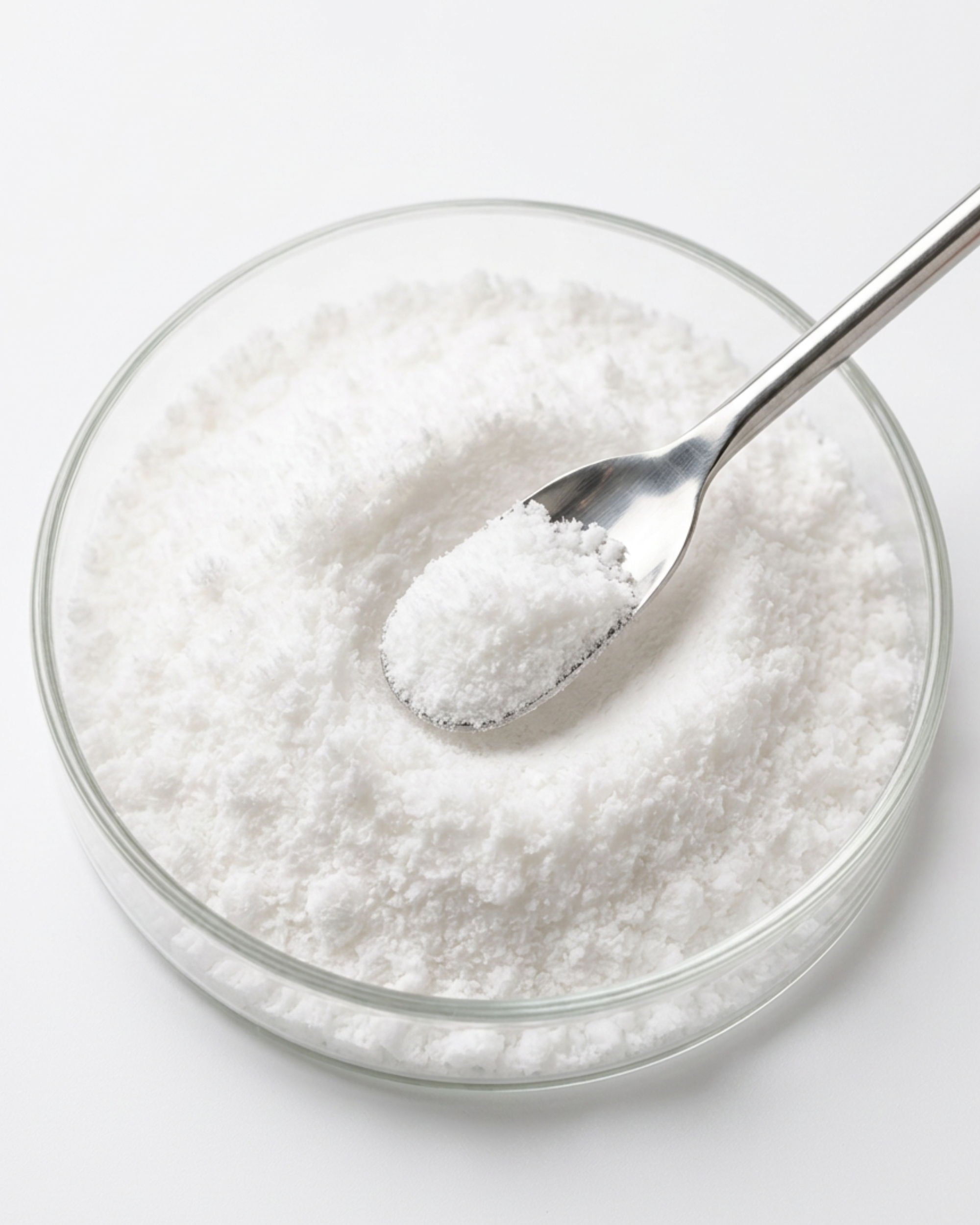
Explore a curated edit of key ingredients.
Learn more
Formulate with Confidence
Practical ingredient education and formulation guidance to help you choose, use and combine cosmetic ingredients with clarity.
Read All Articles
Article
What Does Panthenol Do in Skincare
Ingredient Knowledge
Ingredient Spotlight: Glycerin – Why It Remains a Formulation Essential
Ingredient Knowledge
Ingredient Spotlight: Squalane – Why It's One of Skincare's Most Loved Oils
Ingredient Knowledge
What Does Beta-Glucan Do in Skincare?
Ingredient Knowledge
Understanding Cosmetic Actives in Formulation
Ingredient Knowledge
Understanding Humectants in Cosmetic Formulations
Ingredient Knowledge
Why Formulators Use Ectoin
Ingredient Knowledge
Niacinamide for Barrier Support and Skin Balance
Formulation Systems
Understanding Core Ingredients in Cosmetic Formulation
Formulation Systems
Beginner Guide to Cosmetic Formulation: Building a Complete System
Beginner Formulation
What Does Pentylene Glycol Do in Skincare?
Beginner Formulation
3 Ingredients Beginner Formulators Commonly Misuse - And How to Use Them Properly
Beginner Formulation
Why Glycerin Still Matters
Article
Sodium Hyaluronate VS Hyaluronic Acid
Join the JNA Community
Get practical formulation tips, launches & ingredient updates.