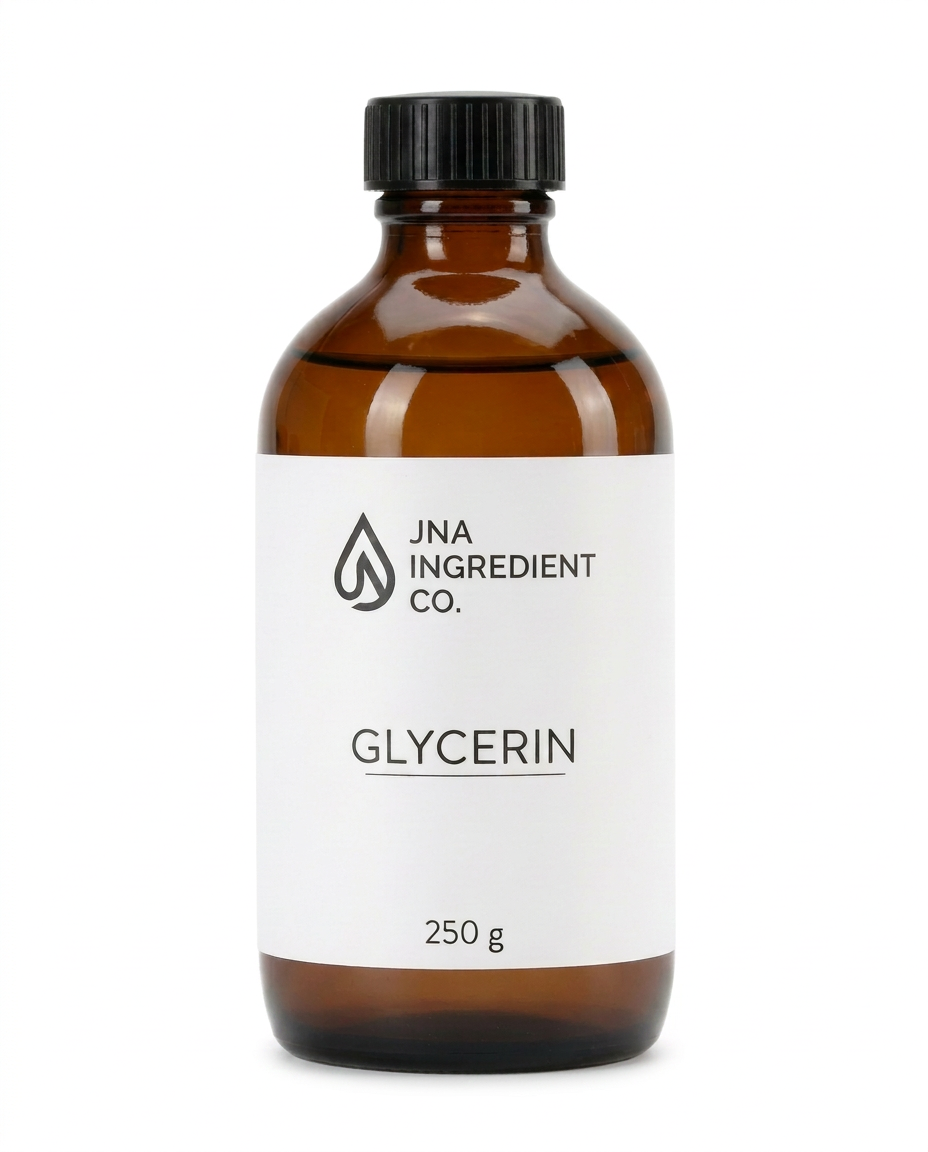
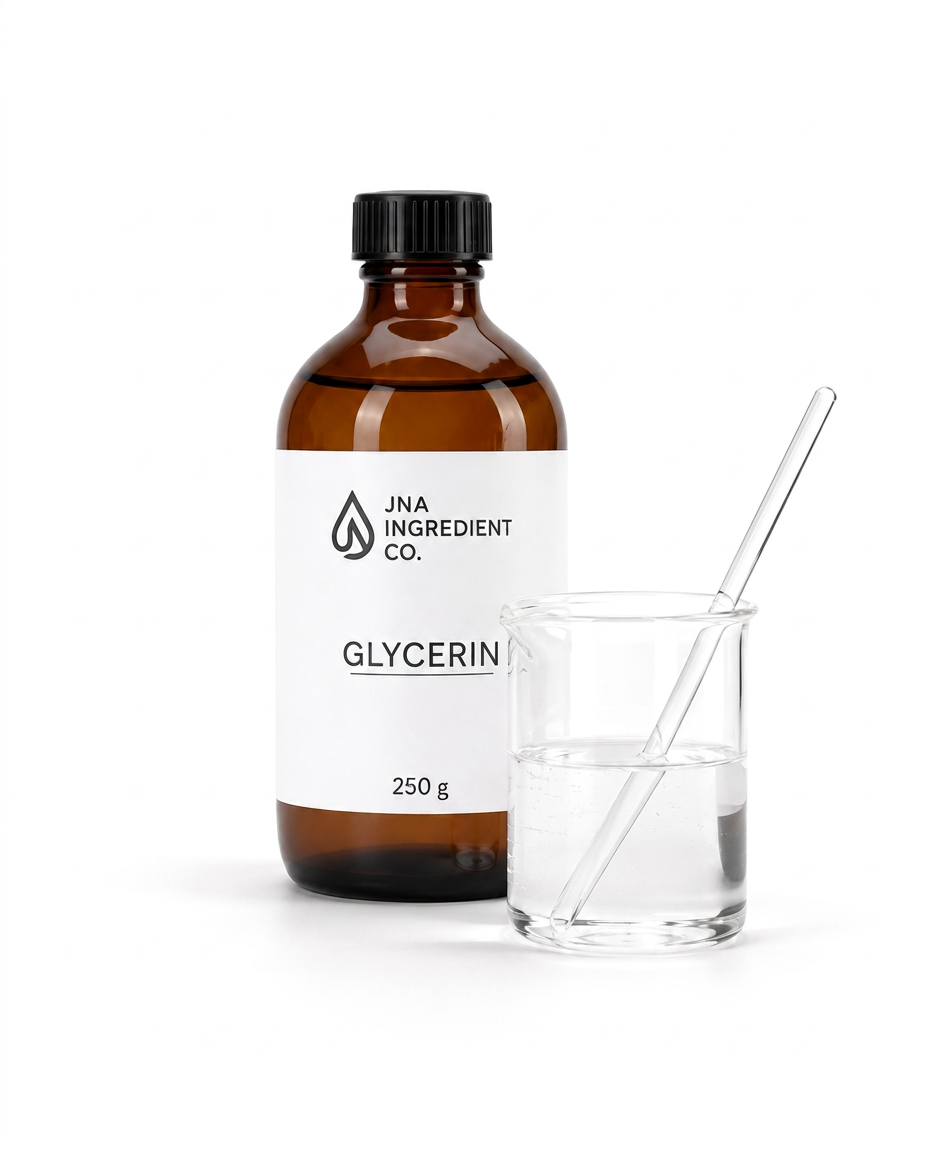


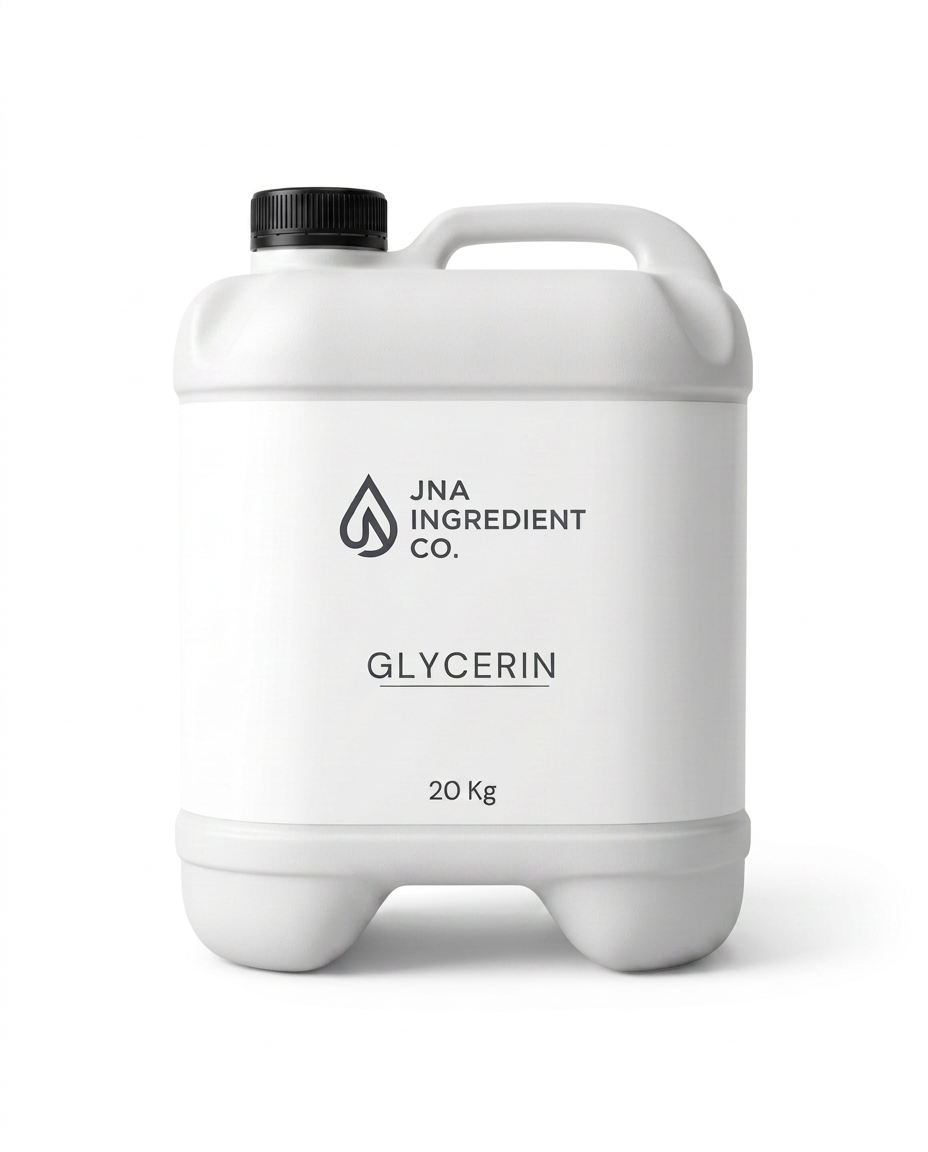
Product packaging may vary from the images shown based on pack size and packaging availability. Product specifications and declared net contents remain unchanged.
Glycerin USP – Cosmetic Grade Vegetable
Need a larger quantity? Explore bulk and trade supply options for production volumes.
VIEW BULK & TRADE OPTIONS*Eligible Australian orders up to 10 kg. Bulk freight excluded.


Choose options
Selected for specification, not just ingredient name.

Specification Matters

Cosmetic grade

Documented quality

Formulator ready
FORMULATION OVERVIEW
Glycerin USP – Cosmetic Grade Vegetable
Glycerin (Vegetable) is one of the most dependable and versatile humectants in cosmetic f
Glycerin (Vegetable) is a formulation essential for creating effective, well-balanced moisture systems across skincare, haircare and personal care. A highly effective humectant, it helps formulations attract and retain moisture, supporting softer, smoother and more comfortable-feeling skin while helping reduce the effects of dryness.
Its value extends well beyond basic moisturising. Glycerin can be used throughout everything from lightweight serums and toners to rich emulsions, cleansers, shampoos and body care, making it an exceptionally useful ingredient to keep at the formulation bench. It can also be incorporated alongside other humectants, emollients and cosmetic actives to build more sophisticated hydration systems tailored to the desired performance and skin feel.
For formulators, Glycerin offers a rare combination of performance, practicality and flexibility. Whether developing a simple beginner formulation or refining the humectant balance of a more advanced system, it provides a dependable foundation that can be adjusted around the needs of the finished product.
Why Formulators Choose It
- Powerful water-binding humectant — helps attract and retain moisture within the finished formulation and supports hydrated, comfortable-feeling skin.
- High-purity vegetable grade — vegetable-derived cosmetic-grade Glycerin with an assay specification of ≥99.0%.
- More than just a humectant — can also function as a solvent for suitable water-soluble cosmetic ingredients.
- Highly formulation versatile — suitable across serums, toners, creams, lotions, cleansers, shampoos, body care and other aqueous cosmetic systems.
- Useful in multi-humectant systems — combine with other humectants to balance hydration performance and sensory characteristics.
- Easy to incorporate — water miscibility and broad compatibility make it a practical building block for beginner through advanced formulation.
Processing Notes
Compatibility Notes
pH Notes
pH 5.0–8.0 (aqueous solution).
Formulation Examples
Troubleshooting
Formulation Impact
Quality Testing
Heavy Metals: ≤5 ppm

Water-soluble humectant and solvent with a lighter sensory profile, useful where reduced tack or additional solvent functionality is desired.

Multifunctional humectant with a lighter skin feel that can also contribute useful formulation-supporting properties.

Highly water-soluble humectant suited to formulations where strong moisture-binding performance is desired at relatively low use levels.
Storage Conditions
Handling Notes
Shelf Life / Retest Guidance
24 months when stored under the recommended conditions. Refer to the batch-specific documentation for the applicable expiry or retest date.
Formulator's Quick Guide
Why Formulators Choose This Ingredient

Powerful Humectancy
Strong water-binding functionality for building effective hydration into leave-on and rinse-off formulations.

Humectant + Solvent
Provides both moisture-binding functionality and useful solvent performance for suitable water-soluble ingredients.

≥99% Vegetable Grade
Vegetable-derived cosmetic-grade Glycerin supplied to an assay specification of ≥99.0%.

Exceptional Versatile
Suitable across skincare, haircare, cleansing, body care, emulsions and surfactant-based systems.
FORMULATOR FAQ
Practical Questions About Formulating with Glycerin
Glycerin FAQ
Ask a QuestionWhy can a high-glycerin formula feel sticky even when the formula is otherwise lightweight?
Should I use Glycerin alone or build a multi-humectant system?
Why is Glycerin often used to pre-disperse gums and powders?
Can Glycerin help dissolve cosmetic actives?
Does adding more Glycerin always give a more hydrating formulation?
Does Glycerin preserve a formulation or reduce the need for a preservative?
Often paired with this ingredient
Explore a curated edit of key ingredients.