Skip to content

Cart

INGREDIENT DICTIONARY

Lamesoft® PO65

INCI: Coco-Glucoside (and) Glyceryl Oleate
Shop this ingredient →

Lamesoft® PO65 is a blend of Coco-Glucoside and Glyceryl Oleate used as a refatting additive in rinse-off cleansing systems. Refatting describes the introduction of lipid-replenishing ingredients to help balance the removal of oils during washing.

It is useful to distinguish three aspects of cleanser performance: removal of soil and excess oil, foam and rinsing behaviour, and the way skin feels afterwards. A refatting additive primarily addresses the last of these, while also interacting with the overall surfactant system.

Lamesoft® PO65

What is Lamesoft® PO65 & why is it used?

The two INCI components have complementary roles: Coco-Glucoside contributes surfactant functionality, while Glyceryl Oleate supplies the lipid-replenishing component. This makes the blend different from Coco-Glucoside supplied on its own as a cleansing surfactant.

Replacing one with the other at the same percentage changes both the cleansing and lipid components of a formula. Treat such a substitution as a reformulation rather than a direct ingredient swap.

Refatting also differs from humectancy. A humectant helps attract and retain water; a refatting ingredient contributes lipid-related conditioning. These functions can complement one another, but do not describe the same mechanism.

QUALITY MATTERS

Why specification quality matters

This is a blended raw material, so a single purity figure does not adequately describe its identity or performance. Confirm the trade grade and full INCI when comparing materials with similar names.

Appearance, viscosity and density are raw-material quality parameters. Their interpretation depends on the stated test conditions, and they should not be treated as specifications for the finished cleanser.

Consult the product specification for the supplied grade. Keep raw-material qualification separate from finished-formulation performance testing.

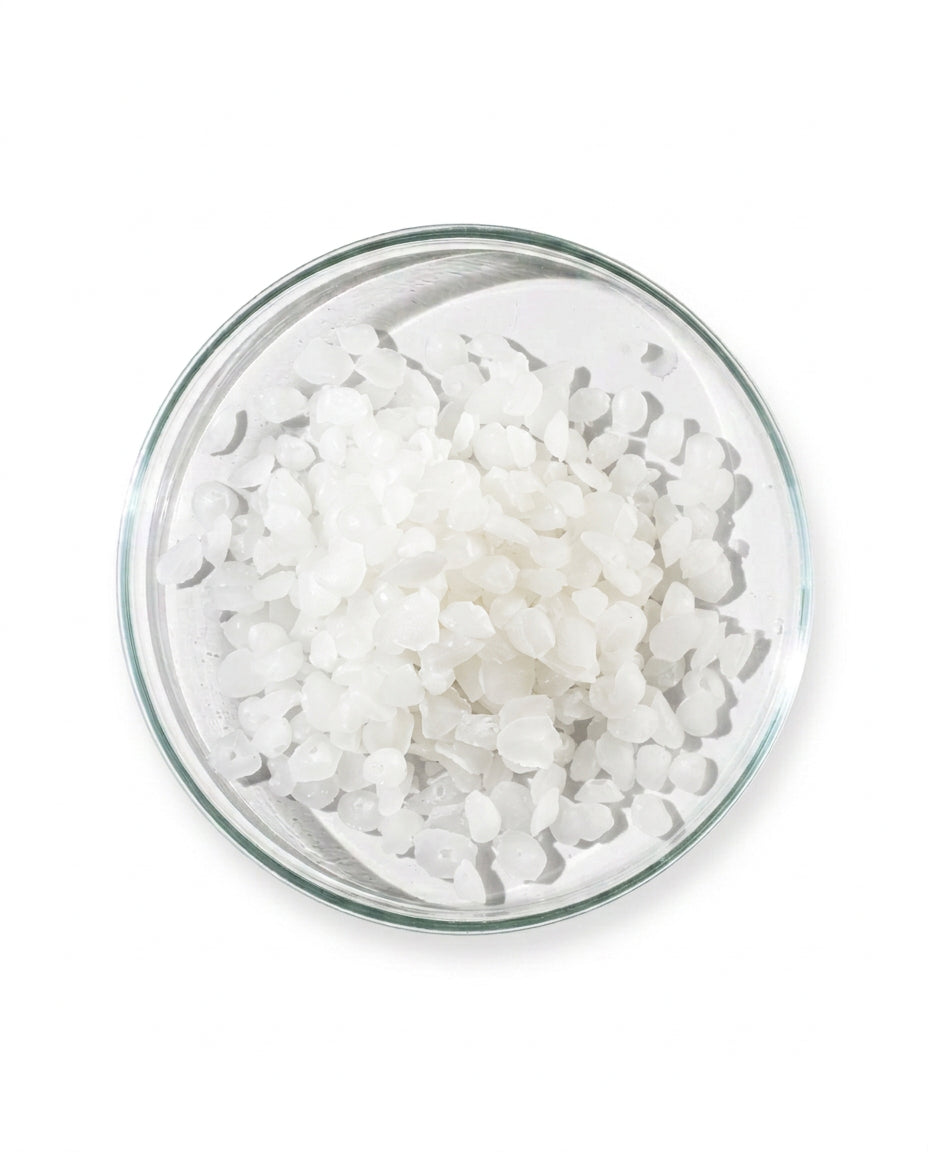
Appearance Transparent to slightly yellowish viscous liquid
Primary function Surfactant
Use level 1.0–5.0%

Key benefits

Refatting Support

Refatting Support

Helps replenish skin lipids during cleansing, supporting a more conditioned post-rinse skin feel.
Rinse-off Mildness

Rinse-off Mildness

Helps reduce the feeling of tightness after cleansing, making it useful in mild facial and body cleansing systems.
Skin Conditioning

Skin Conditioning

Supports a softer, more comfortable post-cleansing feel where conditioning is an important part of the formulation objective.
Surfactant Stability

Surfactant Stability

Helps stabilise surfactant systems, providing functional formulation support alongside its refatting role.

Behaviour in formulations

Adding a lipid-containing blend can alter the behaviour of the surrounding surfactant system. Foam, clarity and viscosity may change together, so judging success from only one of these properties can be misleading.

Thickness, foam volume and after-feel are separate characteristics. A thicker cleanser is not necessarily more conditioning, and a visible change in foam does not by itself establish a change in cleansing performance.

Lamesoft® PO65 can contribute to surfactant-system stability. Whether a particular formula remains uniform over time still depends on the complete composition and processing conditions.

Sensory notes

Separate observations during washing from those after rinsing. Record lather feel and rinsing first, then assess softness, tightness and any residual film after drying.

Use consistent product amounts, water conditions and assessment timing when comparing samples. A pleasant after-feel is a sensory observation; it does not by itself demonstrate clinical mildness or barrier repair.

Formulation considerations

PROCESSING

Introduce the ingredient into the surfactant system with mixing sufficient to distribute it evenly. Localised pockets of the viscous material can make an incompletely mixed sample appear different from the finished batch.

Limit unnecessary aeration. Entrained bubbles can obscure clarity and complicate viscosity comparisons, so compare samples after bubbles have subsided and at the same temperature.

Document the addition sequence and mixing conditions used in successful trials so that the process can be reproduced.

COMPATIBILITY

Compatibility concerns the complete formula, including fragrances, preservatives, electrolytes and other functional additions. Successful incorporation into an unfragranced base does not establish compatibility with every later version of that base.

Recheck the formula when changing the surfactant blend or other components. A result obtained in one cleansing base should not be assumed to transfer unchanged to another.

pH
Lamesoft® PO65 has a raw-material pH specification of 3.0–4.0. This describes the supplied ingredient, not the recommended pH range for your finished cleanser. Select the finished-product pH according to the complete formulation, including its surfactants, preservative system and intended application. Check pH after all ingredients are incorporated and monitor it during stability testing.
FORMULATION EXAMPLES

Facial cleanser: compare the base and refatted version for post-rinse tightness and residual feel, while keeping the wash and rinse procedure consistent.

Body wash or shower gel: assess the balance between foam, ease of rinsing and the feel remaining on skin.

Shampoo: evaluate the complete hair-cleansing system against its intended conditioning requirements. Inclusion of a refatting ingredient alone does not establish detangling or other finished-product performance.

Use level considerations

Recommended range 1.0–5.0%
Suggested starting level 2%

Compare a control formula without Lamesoft® PO65 against otherwise comparable trials within the recommended range. Keep the primary surfactant concentrations and assessment method consistent so that differences are easier to interpret.

When changing its level, rebalance the formulation to 100%. Record both the intended improvement and any trade-offs; the highest addition level may not provide the most suitable overall result.

Formulation summary

A useful development sequence is to establish the cleansing base, compare refatting levels, assess the sensory trade-offs, and then validate the selected complete formula. Changes to fragrance, preservation or processing should be included in the final evaluation.

Ingredient shortlist

Your shortlist is empty. Bookmark ingredients to keep them here while you shop.